Benten Caves: The Art of Crouching
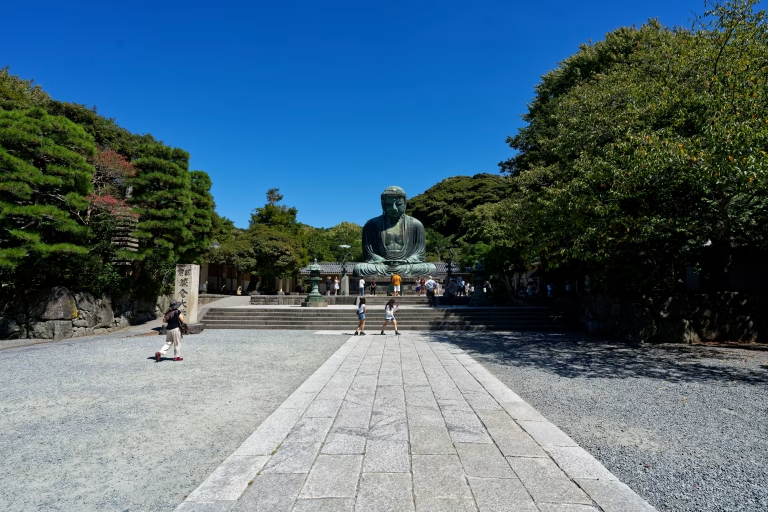
If the Great Buddha is about scale and sky, the Benten Caves are about humility and ceiling clearance.
Tucked into the hillside at Hasedera, the Benten Caves feel less like a major attraction and more like something you’re gently let in on. A side path, a small sign, and then a descent into shadow. It doesn’t announce itself. It waits to see if you’re paying attention. Immediately, the temperature shifts. Cool. Damp. The kind of air that smells like minerals and time. The entryway narrows and you are confronted with a universal truth: no matter how composed you think you are, you will end up ducking awkwardly in a sacred cave.
Who Is Benten, and Why Is She Underground?
The caves are dedicated to Benzaiten, often shortened to Benten, a goddess of music, eloquence, wisdom, and flowing things. Water, words, fortune. She’s one of the Seven Lucky Gods and, in Japan, has roots in both Buddhist and Shinto traditions. A syncretic overachiever. Historically, caves in Japan have long been associated with ascetic practice and esoteric worship. Carving deities directly into stone was both devotional and practical. You work with the mountain instead of trying to conquer it. The Benten Caves at Hasedera are thought to date back centuries, with additions and restorations over time. They are less about monumental architecture and more about intimacy.
No 40+ foot bronze statement piece here. Just rock, shadow, and figures emerging from stone like quiet thoughts.
The Layout: A Sacred Obstacle Course
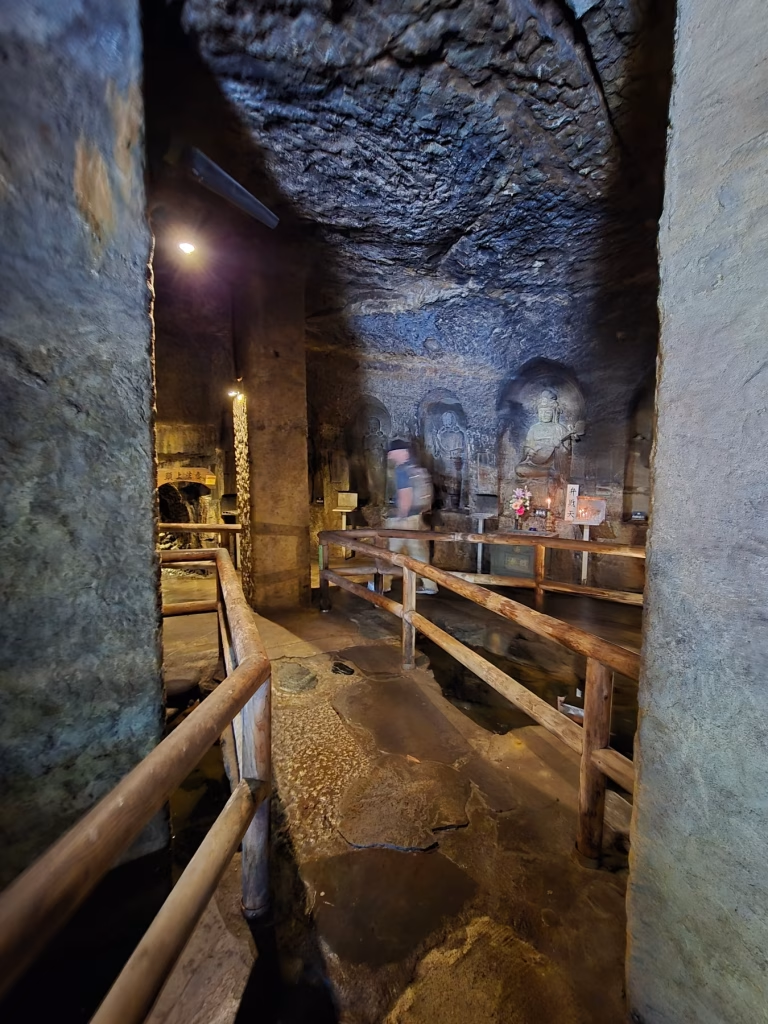
The path inside is narrow and winding. In some sections, you can walk upright, in others your stooped wishing you were much shorter. The lighting is low, provided by small lanterns that cast warm halos on uneven walls.
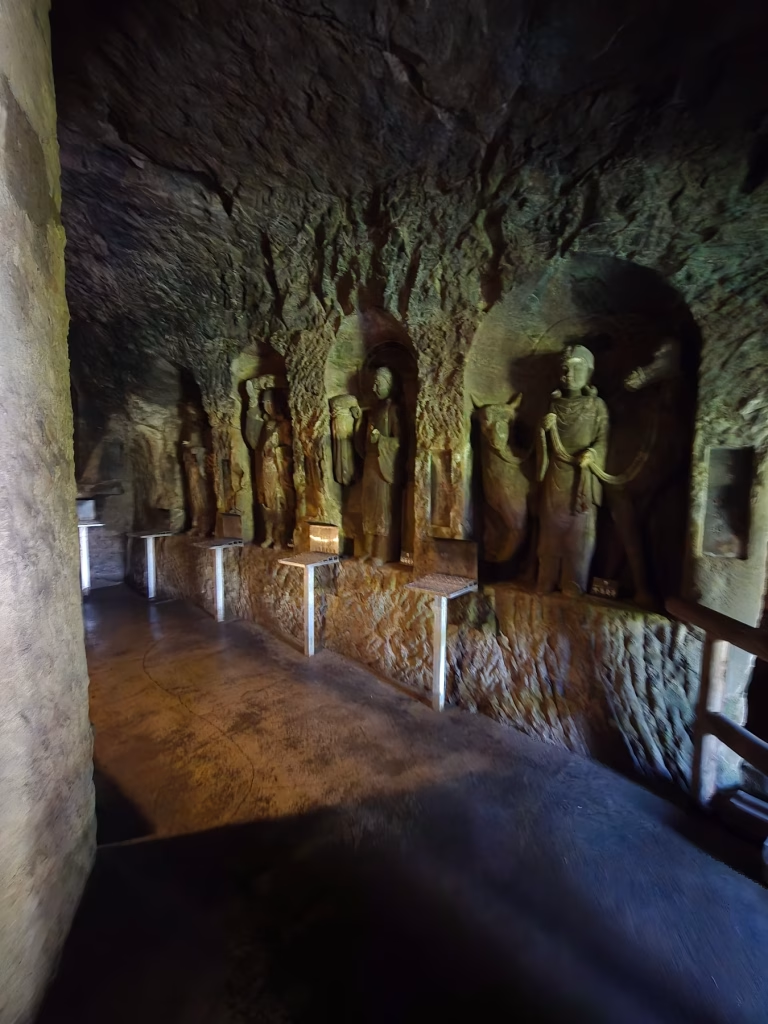
The carvings line the interior like a gallery that forgot about personal space.
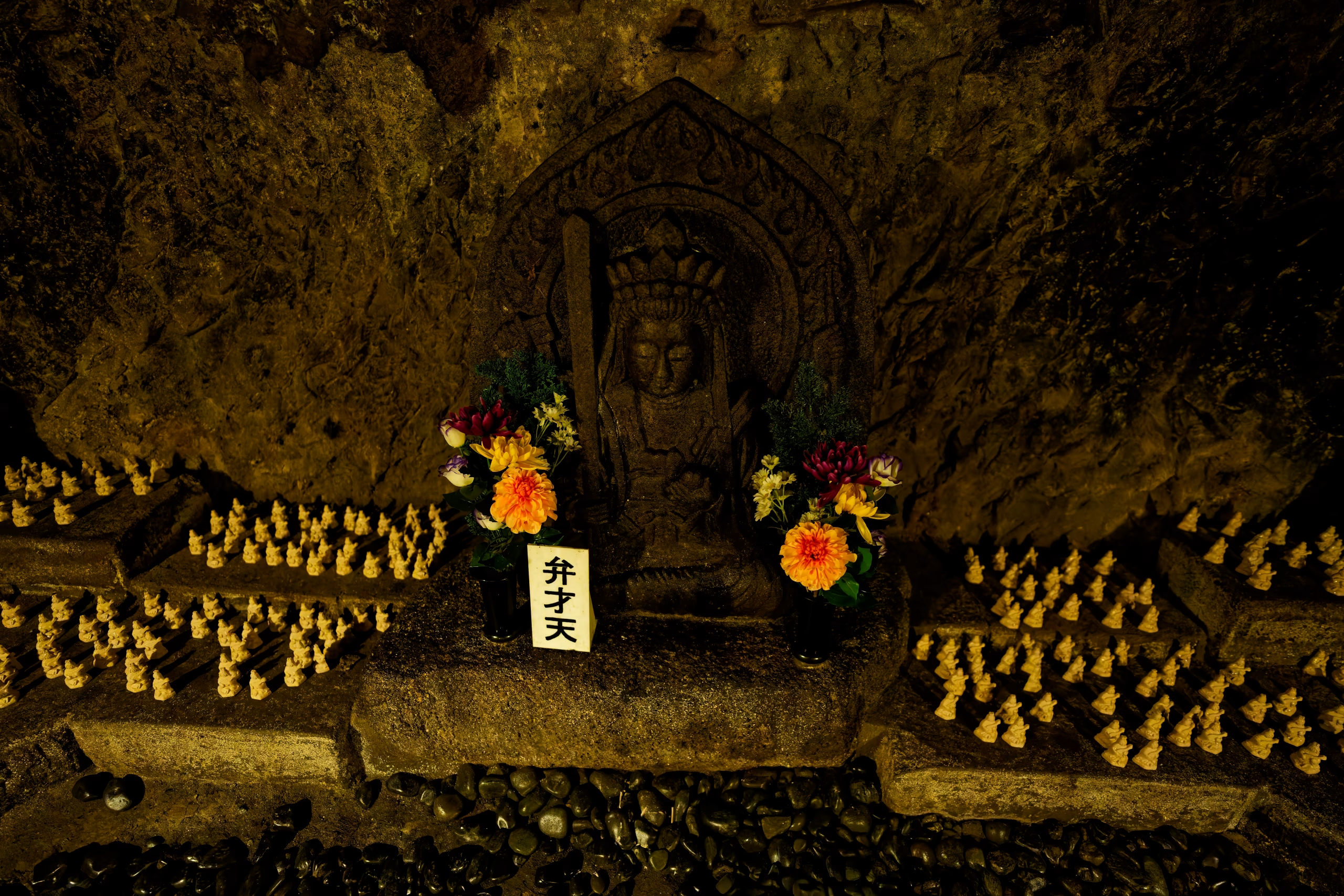
Benzaiten herself appears in various forms, often holding a biwa, a traditional lute. Her expression is calm, almost amused. Surrounding her are smaller figures, including the other Lucky Gods and protective deities. Some are carved directly into the rock face, others are placed in niches. Many are worn soft by time. There’s a pattern to it. Statue. Curve in the wall. Low beam. Another cluster of figures. You move slowly because you have to. Not because a sign tells you to reflect, but because the ceiling insists.
Which might be the point.
Texture Over Spectacle
Photographically, this is a different exercise than Kotoku-in. There’s no dramatic skyline. No sweeping symmetry. Instead, you’re dealing with low light, tight quarters, and surfaces that swallow detail if you’re not careful.
It’s a place for restraint.
High ISO becomes your friend. Shadows become part of the composition rather than something to eliminate. The warm glow of lantern light against cool stone creates subtle contrast. The statues aren’t pristine. Many are chipped, softened, their edges blurred by humidity and time. You don’t photograph the details to impress anyone, more to remember how it felt.
The Quiet Psychology of Small Spaces
There’s something disarming about being underground in a religious site. Temples usually aspire upward. Rooflines, pagodas, gates that frame the sky. The Benten Caves invert that instinct. You go down. You narrow your frame of vision. You accept less space.
And yet it doesn’t feel claustrophobic. It feels focused.
It was not crowded as we walked through, in fact we only saw one other group moving through at the same time. Still we spoke in quiet voices, not because of signage. Because both the acoustics and the atmosphere encourage it.
Small Details Worth Noticing
Look for the variation in carving styles. Some figures are crisp and defined, likely restored or maintained more recently. Others are almost ghostlike, their features barely distinguishable from the surrounding stone.
The biwa held by Benzaiten is a recurring motif. Music in a cave. Sound in a space built of silence. The symbolism is not subtle, but it doesn’t need to be.
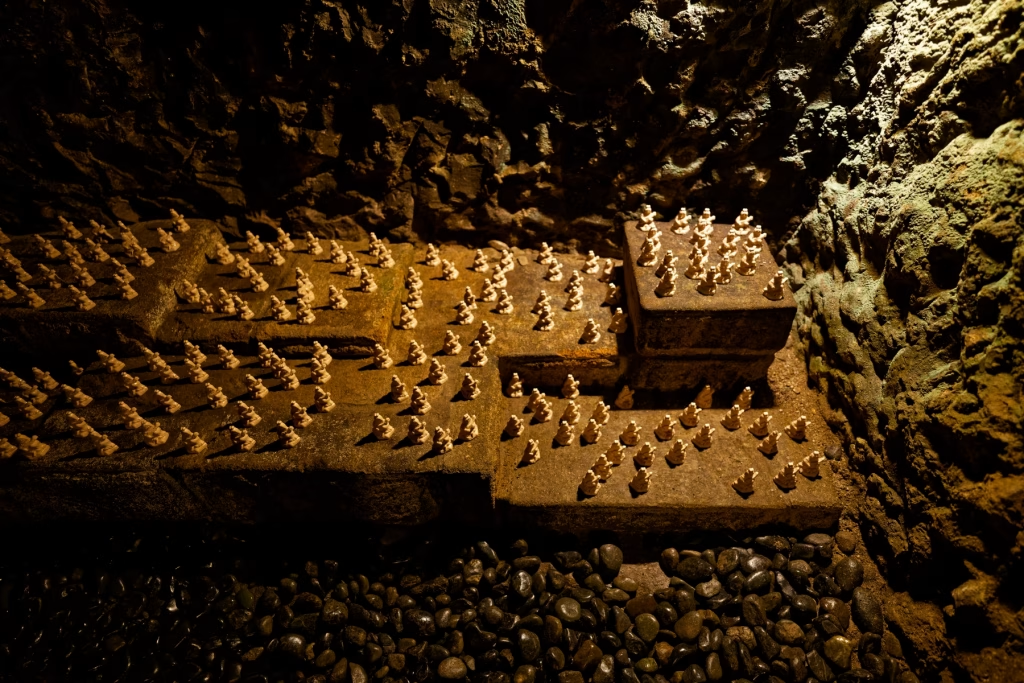
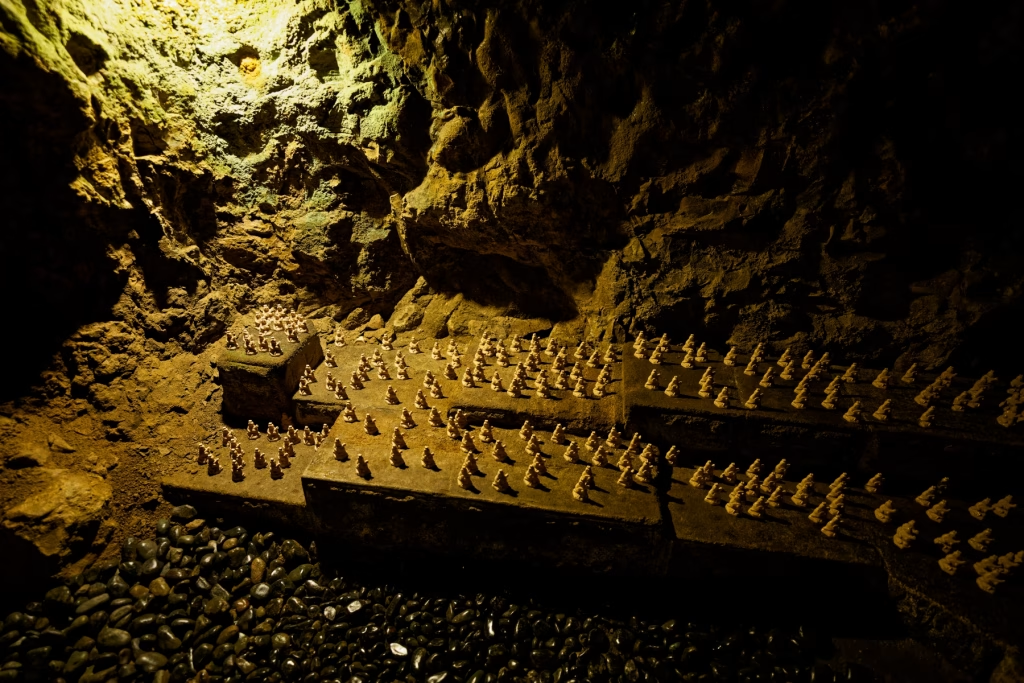
There are also clusters of miniature statues, lined up in rows, offerings left by devotees. They create a quiet repetition that feels almost modern in its minimalism. Pattern within chaos. Order within organic rock.
Personal Calibration, Underground Edition
Coming from the open air of Kamakura’s coastal light, the caves re-calibrate your senses. Your eyes adjust to the darkness. Your pace drops as you make your careful way over the damp stone. There’s a humility baked into the architecture. I found myself thinking about contrast. About how often we chase the grand, the photogenic, the easily digestible landmark. And here, tucked into a hillside, is a devotional space that rewards patience over spectacle.
No panoramic vista. No dramatic reveal. Just stone shaped by hands long gone.
Outside, Kamakura resumes its gentle hum. Cafés. Matcha soft serve. The usual postcard softness. But for a moment underground, you were reminded that belief does not require grandeur. Sometimes it just needs enough room for you to duck your head and keep moving forward.