Hakone Yuryo: A Private Onsen in the Rain
Public bathing is a huge part of life in Japan, but it comes with some cultural nuances that visitors should understand. Traditionally, tattoos have been associated with the Yakuza, Japan’s organized crime groups. For much of the twentieth century, large elaborate tattoos were used as a form of identity within those groups. Due to that history, many public baths still maintain rules restricting visible tattoos. It’s less about judging the individual person and more about maintaining a long-standing cultural norm within the bathing space.
Two American tourists are obviously not going to be mistaken for members of the Yakuza, but rules are rules. While some modern baths have relaxed their policies, many still ask guests to cover tattoos or avoid public bathing areas altogether. Since we both have tattoos, we opted for a private onsen room, which is actually a fantastic way for first-time visitors to experience the culture.
If you’re unfamiliar with onsen etiquette, there are a few basics and yes, to a Western mindset some of them feel… a little intense at first. In a public bath, you begin in the locker room, where you remove all of your clothes and store them away. You’ll often change into a yukata afterward so you can walk around the facility, but that comes later. First, you head into the bathing area itself and this is where the cultural shift really begins. Before you even think about entering the bath, you are expected to wash. Completely. Thoroughly. There are rows of low stools, handheld shower heads, and buckets, and you sit down and scrub yourself head to toe. Soap, rinse, repeat. This step is not optional, and it’s not rushed. The expectation is that you enter the bath already perfectly clean.
To a Westerner, this can feel backwards. We’re used to baths being for cleaning. In Japan, it’s the opposite. The bath is not for hygiene, it’s for relaxation, reflection, and quiet. The shared water is meant to stay pristine, which is why everyone takes responsibility for cleaning themselves beforehand. Once you understand that, it stops feeling strict and starts feeling… respectful and even communal. And yes, this is all done completely naked. No towels. No swimsuits.
On paper, that sounds like a nightmare for anyone raised with even a hint of Western modesty. But in practice, it’s almost disarming how normal it feels. No one is looking at you. No one cares. People move quietly, mind their own space, and treat the entire experience with a kind of unspoken etiquette that makes it feel less like exposure and more like neutrality. The human body just… exists there. Nothing more, nothing less. Private baths, like the one we booked, remove even that barrier. Instead of a shared space, you’re given your own room, your own shower, your own open-air bath, your own little slice of calm.
Once you’re done soaking, the experience doesn’t just end at the bath. This is where the yukata comes back into play. After drying off, you slip into the light cotton robe and step back out into the facility, which feels less like a spa and more like a quiet little village tucked into the hillside. People wander slowly through the halls and outdoor walkways, moving between baths, lounges, and small rest areas, all wrapped in matching patterns like some kind of low-key cult of relaxation.
Between soaks, there’s a rhythm to follow, and it’s worth embracing. Start with a proper bath, take your time, and then cool down the way the locals do: a bottle of cold milk or coffee milk from a vending machine, that crisp, almost absurdly refreshing first sip hitting after the heat. Ice cream is practically mandatory, usually something simple like vanilla or matcha, eaten while sitting outside in the evening air. If you’re lucky, there’s a foot bath tucked somewhere along the property, letting you soak without fully committing again, which feels just as satisfying.
There are also the little extras that round out the experience: sauna rooms if you want to push the heat further, cold plunge baths if you’re feeling brave, quiet lounge areas with tatami mats where people nap, and massage chairs that look like they haven’t changed since 1998. Some places even offer light snacks or late-night ramen, because apparently the only thing better than an onsen is an onsen followed by noodles.
It’s easy to think of an onsen as just “a bath,” but that’s underselling it. It’s a full ritual, slow and a little indulgent, but you deserve it after flying thousands of miles and walking thousands of steps. Somewhere between your second soak, your third bottle of milk, and that moment of sitting in a yukata with absolutely nothing left on the schedule, you realize this is the part you’ll end up missing the most.
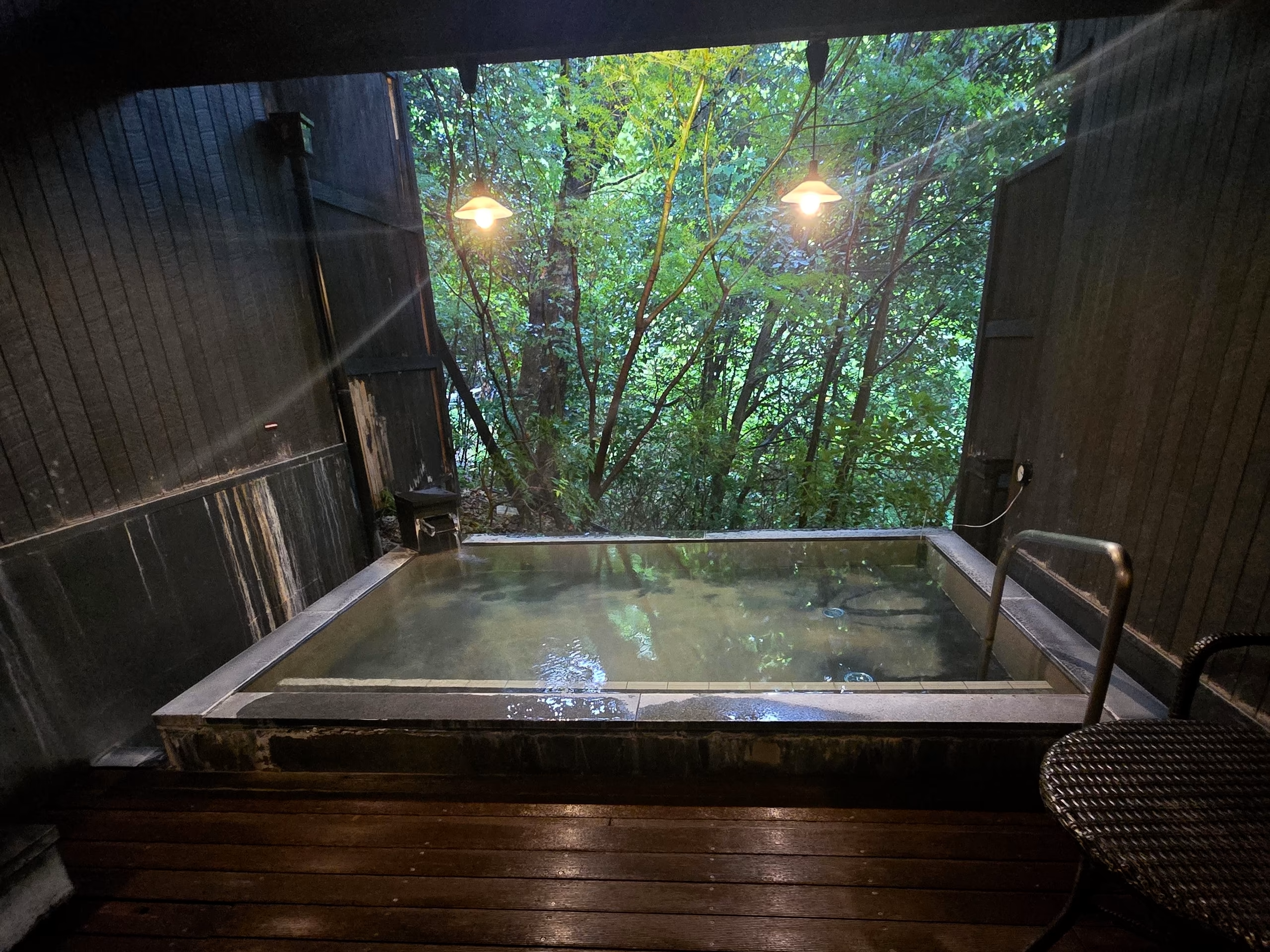
When we checked in, we were handed a small map and pointed toward our room somewhere deep within the sprawling complex, like we were being sent off on a quiet little side quest. The room itself was incredible. There was a little lounge area inside, a place to sit if you get overheated along with a proper bathroom. Outside is the shower and the bath itself.
Hakone Yuryo sits along a forested slope, and our bath was essentially perched on the side of the mountain in the open air. Steam drifted off the surface of the water while rain tapped softly on the leaves overhead. Beyond the bath the view stretched into mist-covered forest, layers of green fading into grey clouds. Hakone itself is part of the Fuji-Hakone-Izu National Park, an area known for its volcanic activity, which is what gives the region its abundance of natural hot springs. The water here is typically classified as alkaline simple hot spring water, which is said to be gentle on the skin and beneficial for circulation and muscle recovery. Some sources also note trace minerals that may help soften skin and promote relaxation. The bath itself was about 106°F, which is typical for onsen water. Whether the science fully supports every claim or not, I can confirm that sitting in extremely hot water while rain falls around you is an excellent way to forget about a stressful day.
Leaning back against the wooden edge of the bath, feeling the hot water surround you while cold rain lands on your forehead, is one of those strange sensory experiences that is difficult to explain but impossible to forget. The cicadas were singing again somewhere in the trees. Steam drifted through the cool air. At one point I considered updating my team’s status message back home to read: “Never bother me again. I’m living in an anime now.” After spending most of the day cold and soaked from the storm, the experience of being warm and soaked felt like it was repairing something in my soul that I didn’t even realize had broken earlier.
I debated leaving out the detail where I used the hair dryer afterward to dry my socks and shoes, but honesty matters in travel writing and you would have done the same thing.
The two hours we booked passed far too quickly. By the time we stepped back out into the cool air, the rain had softened to a light mist, the kind that hangs in the trees instead of falling and we caught the shuttle back to the station. Hakone may not have gone according to plan, but this was the experience that made it all worth it.
If you ever find yourself anywhere near Hakone, make the time for an onsen. Especially a private one if you’re even slightly unsure about the whole experience. It strips away the hesitation, leaves you with the good parts, and eases you into something that feels uniquely, unmistakably Japanese.
We’ll be back and next time, we’re staying longer.